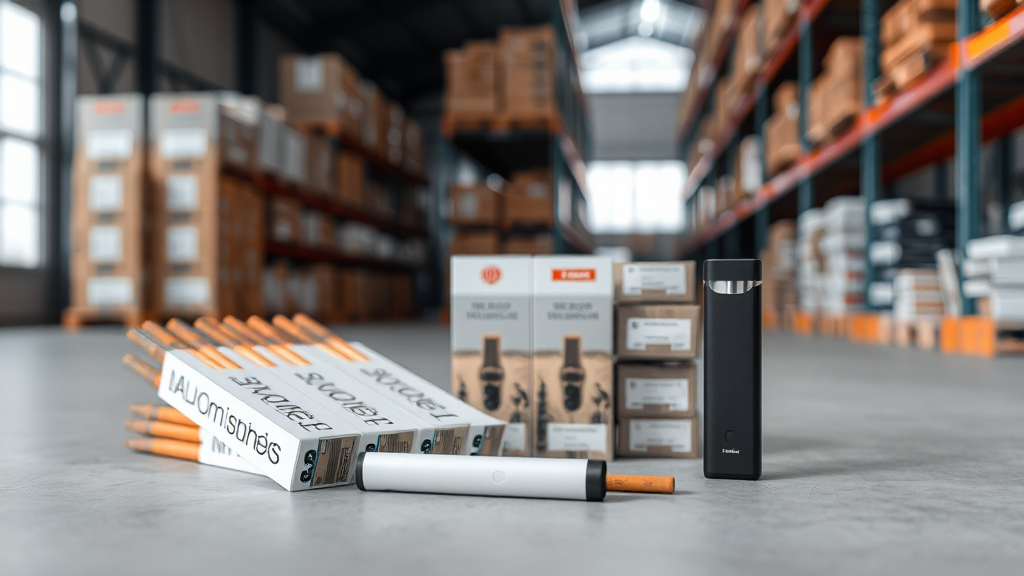
Who Carries the Risk? Delivery and Payment Terms for EU Heated Tobacco Orders
The carton was supposed to arrive on a Tuesday. It arrived the following Monday, slightly crushed at one corner, with two packs inside visibly dented. Nothing dramatic, but enough to make me realise I had no idea who was actually responsible for that damage — the shop, the courier, or me. That single delayed box turned into a small education in how risk moves between a seller, a carrier and a buyer. If you order cartons of heated tobacco sticks or heated tobacco devices from an EU-based shop, the same mechanics apply to you, and understanding them before you click “pay” is far more useful than understanding them after something goes wrong.
When Risk Actually Transfers From Seller to Buyer
In most EU consumer transactions, the seller carries the risk of loss or damage until the goods physically reach the buyer. This is the default position under European consumer protection rules, and it matters because it means a parcel that disappears in a depot or arrives with a cracked device is, in principle, the seller’s problem to solve — not yours. The seller cannot simply push you toward the courier and wish you luck.
Where buyers get confused is the difference between risk and ownership. Ownership of the goods usually passes when the contract is completed, but risk passes on delivery, which for consumer sales means the moment you or someone on your behalf takes physical possession. A “delivered” scan at a locker you never visited, or a parcel left with a neighbour you did not authorise, is a grey area that depends heavily on what you agreed to at checkout. If you selected a specific delivery method, the risk generally stays with the seller until that method is completed properly.
This is why the delivery terms shown at checkout are worth reading rather than scrolling past. A shop that ships sealed original packs by the carton across the EU is making a promise about how those cartons travel. If the promise is broken somewhere between the warehouse and your door, the starting assumption should be that the seller absorbs the loss and then pursues the carrier themselves. You are not expected to mediate between a logistics company and a retailer you have never met.
There is one practical wrinkle: business-to-business orders and some bulk purchases can shift risk earlier, sometimes at the point of dispatch. If you are buying carton quantities for resale or shared use, check whether the terms treat you as a consumer or a business. The protections are not identical, and the difference is usually buried in a single line of the terms and conditions.
How Payment Timing Changes Your Leverage
Payment timing is the quiet variable that decides how much power you have when something goes wrong. Pay by card or through a recognised payment provider, and you retain a dispute mechanism. Pay by bank transfer to an unfamiliar account, and you have handed over your leverage before you have seen the goods. That is not a moral judgement about any particular shop — it is simply how reversibility works.
Card payments, and to a lesser extent some digital wallets, come with chargeback rights. If a carton never arrives, or arrives with contents that do not match what was described, you can raise a dispute with your card issuer. The issuer then asks the merchant to prove delivery and conformity. This process is slow, but it exists, and it is the main reason sellers are motivated to resolve problems before they escalate.
Cash on delivery, where available, inverts the leverage entirely. You inspect before you pay, which is excellent for you and explains why fewer EU shops offer it for tobacco products — the regulatory and logistical overhead is significant. Prepayment by transfer is the opposite: fast, cheap for the seller, and unforgiving for you. If a seller insists on transfer-only payment and offers no card option, treat that as information about the risk you are accepting.
The timing of payment also affects claims windows. Some shops start the clock for reporting damage from the delivery date, others from the invoice date. If you pay weeks before dispatch, and the shop counts from payment, your window may be half gone before the box even leaves the warehouse. When you order heated tobacco devices or stick cartons, note the delivery date and report any issue immediately, in writing, with photographs. A timestamped message is worth more than a phone call nobody logged.
Claims, Evidence and a Practical Sequence for Buyers
Claims succeed or fail on evidence. A photograph of the sealed carton before opening, a photo of the damaged pack or device, the outer packaging with its labels intact, and the delivery note all matter. Courier drivers sometimes ask you to sign for a parcel as “unchecked”, which preserves your ability to claim later. If the box looks compromised, note it at the door rather than after the driver has left.
Report the problem through the shop’s stated channel, not through social media or a general enquiry form. Consumer rules in the EU give you a right to have faulty or non-conforming goods repaired, replaced, or refunded, and the seller is the party you deal with — not the courier. Keep the correspondence factual: order number, delivery date, what arrived, what you expected, and what outcome you want. Vague complaints get vague responses.
If the seller stalls, escalate in a defined order. First, a written reminder with a deadline. Second, a formal complaint referencing the terms you agreed to. Third, your card issuer’s dispute process, if you paid by card. Fourth, the national consumer authority in the seller’s country or your own, depending on the cross-border framework that applies. Most EU retailers resolve matters well before step three, because chargebacks cost them money and reputation.
Before your next order, a short checklist is enough. Confirm the delivery terms and who bears risk in transit. Confirm the payment methods available and prefer reversible ones. Confirm the claims window and how to report damage. Save the order confirmation and the delivery note. And if you are buying carton quantities, check whether the terms treat you as a consumer. None of this is complicated, but it is the difference between a delayed carton being a minor annoyance and a delayed carton being your problem. The box that arrived late for me was replaced without argument once I could show what had happened and when — the lesson was not that shops are unreliable, but that clarity about risk and payment is what makes a claim straightforward when it is needed.