Lana Ultra 2: What You Can Verify Before It Ships
At the moment you hit checkout on a disposable vape order, you know a handful of concrete facts: the product name on the listing, the puff count printed on the page, the price you agreed to pay, and the delivery window the store advertised. Everything else — whether the device is authentic, whether the flavour matches your memory of it, whether the package will actually arrive tomorrow — sits somewhere between confident expectation and pure guesswork. This article is about drawing a clean line between the two. Using the lana pix and Lana Ultra 2 listings as a working example, we will walk through assumption-versus-reality pairs that any careful shopper can test before a parcel leaves the warehouse.
The goal is not to be cynical about online vape retail. It is to be precise. A buyer who knows which claims are verifiable and which are not makes better decisions, wastes less time on support tickets, and gets more value out of every order.
Assumption One: The Puff Count Is a Guarantee
The most common assumption at checkout is that the number in the product name is a promise. A device called the Lana Ultra 2, or a listing for a lana pix 20k, tells you the manufacturer’s rated capacity — not your personal experience of it. This is the first place where assumption and reality separate.
Puff ratings are measured under controlled conditions: a fixed puff duration, a fixed interval between draws, and a fresh battery throughout. Real usage involves longer draws, shorter pauses, and a battery that tapers as it drains. Two people using the same device can legitimately report very different puff counts. What you can verify before shipping is narrower but more useful: that the listing states a specific number, that the number matches the manufacturer’s published specification for that model, and that the store is not quietly mixing up two different products in one description. If a page says 20,000 puffs, check that the model name, the coil specification, and the battery capacity all belong to the same device. Consistency inside the listing is the signal you can actually audit.
Assumption Two: Every Listing Photo Is the Exact Product
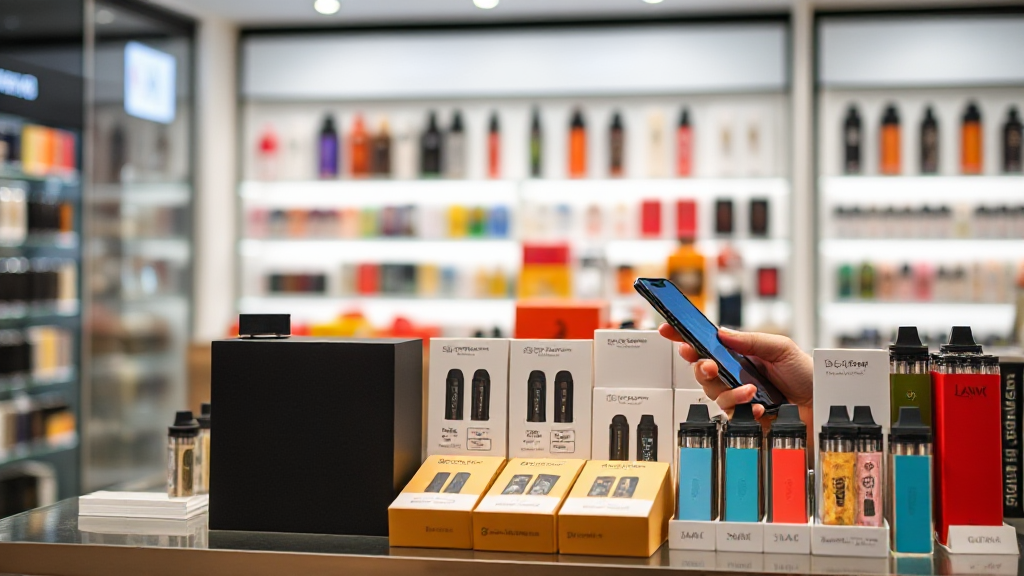
Product photography in the vape category is often shared between variants. A store may use one clean hero image for a device that ships in six colours and a dozen flavours. That is normal retail practice, but it creates a gap between what you assume you are buying and what the warehouse will pack.
Before a parcel ships, you can close that gap by reading the variant selector rather than the photograph. On a listing for a lana pen plus 9k, for example, the meaningful information is in the dropdown: which flavour, which colour, which resistance. If the selector is vague, or if the description does not name the exact variant, that is a verifiable problem you can raise before dispatch rather than after. A quick message asking the store to confirm the specific variant you selected is a reasonable, low-friction check. Reputable retailers expect it.
What you cannot verify from a photograph is freshness. Disposable devices have a shelf life, and a picture tells you nothing about how long a unit has been sitting. What you can do is ask about stock rotation, or simply buy from a store that moves volume quickly enough that old stock is unlikely. That is an inference, not a guarantee — an important distinction.
Assumption Three: Fast Delivery Means Next-Day Delivery
Every online store advertises speed. The word “fast” is doing a lot of unexamined work in most of those claims. What you can actually verify before shipping is the delivery model, the cut-off time, and the payment method attached to it.
Cash on delivery is a useful case study. When a store offers COD, the courier collects payment at the door, which means the transaction is not finalised until the parcel is physically in your hands. That is a genuine consumer protection, and it is verifiable in advance: the checkout page either offers the option or it does not. What you cannot verify in advance is the exact hour the courier will arrive. Delivery windows are estimates built on route density and traffic, not commitments. Treating a window as a commitment is one of the most common sources of unnecessary frustration in online retail.
What you can do is check the cut-off time. If you order before the stated cut-off and the store’s own policy promises same-day or next-day dispatch, you have a documented expectation to hold them to. If the cut-off is not stated anywhere, that is itself information — it tells you the delivery promise is softer than the marketing suggests.
Assumption Four: All Disposable Brands Are Interchangeable
A buyer scanning a category page can easily assume that one high-puff disposable is much like another. The reality is that brands differ substantially in coil design, airflow, battery management, and flavour accuracy. The category is broad enough that treating it as a single product type leads to disappointing purchases.
Consider the range of options a shopper might compare: a marbo vape 25k sits at a very different point on the capacity curve than a compact pen-style device, and a snowwolf 16k targets a different user again. Heated-tobacco users looking for terea singapore options are shopping in an entirely separate category with its own device compatibility rules.
Before shipping, what you can verify is compatibility and specification. Does the device match the way you actually vape? If you take long, slow draws, a tighter airflow device will suit you better than a high-capacity one built for short pulls. If you want a device that lasts a week of heavy use, the marbo 25k class of product is the relevant comparison, not a 9,000-puff pen. Reading the specification rather than the puff number is the single most useful habit a disposable buyer can build.
Assumption Five: Authenticity Is Something You Confirm After Delivery
Many buyers assume that verifying authenticity is a post-delivery activity — scratch the code, check the website, hope for the best. In practice, several authenticity signals are available before the parcel ships, and they are worth checking at the point of purchase.
The first is whether the listing names the manufacturer explicitly and consistently. Counterfeit and grey-market listings tend to be vague about brand ownership. The second is whether the store publishes any verification guidance at all. A retailer that explains how to check a product’s authenticity is signalling that it expects its stock to pass. The third is pricing coherence: if a device is listed far below the prevailing market rate across multiple stores, that is a flag worth investigating before you pay, not after.
What you cannot verify in advance is the physical unit in the box. That genuinely requires the parcel to arrive. The honest position is that pre-shipment checks reduce risk; they do not eliminate it. A buyer who understands that distinction is far better equipped to deal with the rare bad outcome calmly.
Assumption Six: Support Will Fix It, So Details Do Not Matter
The final and most expensive assumption is that customer support will smooth over any ambiguity in the order. Support teams can resolve a great deal, but they cannot resolve a problem that was never specified. If you did not select a flavour, if you did not note a delivery preference, if you did not confirm the variant, the store has nothing to correct.
Before shipping, you can verify that your order record is complete. Check the confirmation email against what you intended to buy. Check that the variant is named. Check that the delivery address is exact, including unit numbers that couriers routinely miss. These are small, boring checks that prevent the majority of post-delivery disputes.
A useful discipline is to treat the order confirmation as a contract rather than a receipt. Read it the way you would read a specification sheet for a lana ultra 2 — line by line, looking for mismatches. If something is wrong, raise it immediately, while the parcel is still in the warehouse and correction is cheap. Once it ships, every fix becomes a return, and returns cost everyone time.
A Short Method for Checking Things Yourself
Pull these six checks into a routine and the assumption-versus-reality gap closes considerably.
One: read the specification, not the headline. The puff count is marketing; the coil, battery, and airflow are engineering. Compare those across the devices you are considering.
Two: confirm the exact variant before paying. Flavour, colour, and resistance should all be named in your order record, not inferred from a photo.
Three: check the dispatch cut-off. A stated cut-off is a commitment; an unstated one is a hope. Order before the cut-off if timing matters.
Four: prefer payment models that keep leverage with you. Cash on delivery means you inspect before you finalise, which is a meaningful advantage for a first order from any store.
Five: look for authenticity guidance. A retailer that explains how to verify its stock is usually a retailer that expects verification to succeed.
Six: reconcile the confirmation email immediately. Fix errors while the parcel is still in the warehouse, when correction is free.
None of this requires special knowledge. It requires the willingness to separate what a listing tells you from what you have quietly assumed. Do that, and the Lana Ultra 2 order that arrives at your door is far more likely to be the one you actually intended to buy.
Frequently Asked Questions
Can I verify the puff count of a disposable before it ships?
You can verify that the listing states a specific figure and that it matches the manufacturer’s published specification for that exact model. You cannot verify your personal puff count, because it depends on draw length, draw frequency, and battery condition during use. Treat the number as a rated capacity under controlled conditions, not a personal guarantee.
Is cash on delivery actually safer for a first order?
It shifts leverage toward the buyer, because payment is collected at the door rather than at checkout. That means you can inspect the parcel before the transaction is finalised. It does not verify authenticity by itself, but it does mean you are not chasing a refund if something is visibly wrong.
How do I know whether a listing is describing the right device?
Check internal consistency. The model name, coil specification, battery capacity, and puff rating should all describe the same product. If the page mixes specifications from two different devices, or if the variant selector is vague, ask the store to confirm before dispatch. That question is cheap now and expensive later.
What should I check in the order confirmation email?
Four things: the exact variant, the flavour, the delivery address including unit number, and the dispatch window. If any of those differ from what you intended, raise it immediately. Corrections made before dispatch are simple; corrections made after dispatch become returns.